
Written by Sofia Miana Ponce, Master in International Sport Management Alumni
What it’s really like to volunteer at the Olympic Games
Even before starting my Master in International Sport Management, one of my dreams was to be part of the Olympic Games. As I’m far from being a professional athlete and, having recently graduated, I still didn’t have enough experience to work there, the only way I found to get involved in these games was to volunteer.
As soon as applications opened, I submitted mine. I was lucky enough to be selected as a National Olympic Service Centre Volunteer in Livigno (The host city for all the snowboard and freestyle ski competitions). It’s a beautiful village in the middle of the Italian Alps, next to the Swiss border.
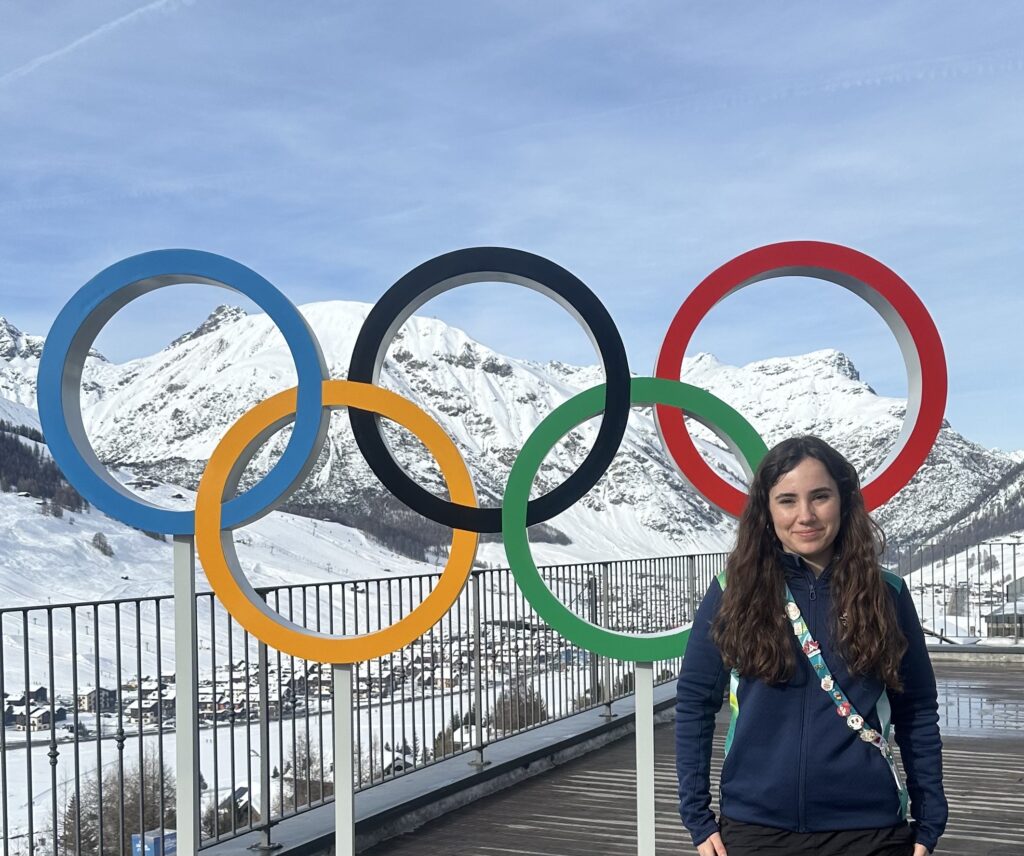
My role in the Olympic Village
You may ask what exactly my role was. Honestly, even though I initially had a slight idea, it wasn’t until I got there that I could fully understand it.
Let’s start from the beginning: my functional area was National Committee Services. This area basically acts as the main point of contact between the Organizing Committee of the Games (Milano Cortina in this case) and the different National Olympic Committees.
I was based in the Olympic Village, and my tasks varied depending on the day: solving general inquiries from the committees and helping them whenever possible, or contacting the right person if they needed something more specific. I also booked meeting rooms, distributed different materials, and (one of my favourite tasks 😉) distributed Olympic diplomas and medal boxes (unfortunately not directly to the athletes).
From Paris 2024 to Milano Cortina 2026
I must admit that this was not my first Olympic volunteering experience, as I was also a volunteer during the Olympic and Paralympic Games in Paris only two years ago. There were several differences though: the role was not exactly the same, it was the Summer instead of Winter, and there was another very important difference: between these to experiences, I completed my Master in International Sports Management at ESBS.
Applying Knowledge from ESBS
Thanks to my Master, I was able to better understand how the international sports system is structured within the Olympic Movement: the role of the International Olympic Committee, the International Federations that govern each sport, and the different National Olympic Committees.
It also helped me better understand everything that happens behind an event of this scale: the different functional areas involved, such as logistics, transport, sport operations, accommodation, and many others, as well as the huge number of people working together to make the Games happen.
Having this knowledge makes you see everything from a different perspective and, in a way, helps you work more efficiently. What we all see on TV is just the final result of a huge amount of work happening behind the scenes.
Being able to experience that environment and be in the middle of it all helped me connect many of the concepts I had learned during the Master with the real world. It also made me realise how important coordination, communication, and teamwork are when organizing events of this scale.
If you’re considering volunteering here’s the deal
My personal advice is simple: if you can afford it, don’t hesitate.
Something hat might be useful if someone is thinking about volunteering: transportation to the host city and accommodation are usually not included, so you need to arrange those yourself. Normally, only the uniform, public transportation within the city, and meals during working days are provided.
Also, unfortunately, only volunteers working directly in venues or in roles that require it are able to watch the competitions.
Even if you are not necessarily planing to work in sport events in the future, the atmosphere of the Olympic Games, the Olympic Village, and being surrounded by athletes and people from all around the world is something that cannot really be compared to anything else.
It is not something you can fully experience and enjoy just by watching it on TV.
A truly unforgettable experience
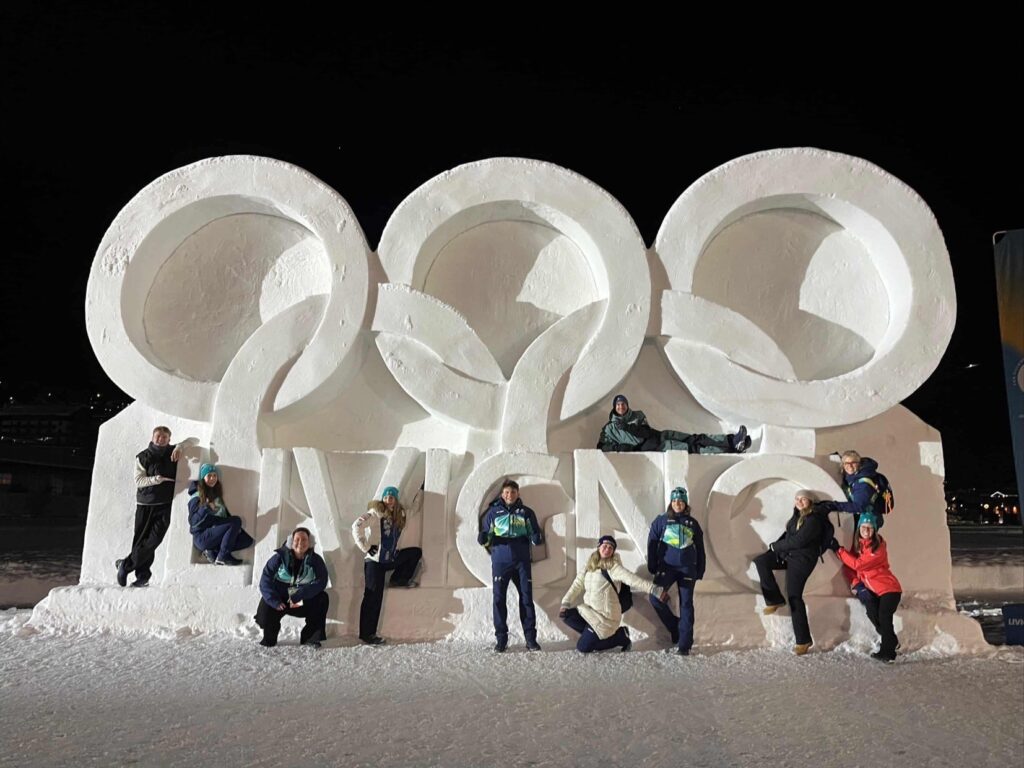
Looking back, what I value most from this experience is the people. I had the chance to meet incredible volunteers and colleagues from many different countries. People from whom I learned a lot and with whom I created friendships that I’m sure will last far beyond the Games.
Experiences like this not only allow you to grow professionally and understand the industry better, but also help you grow personally. For me, being part of the Olympic environment, even in a small role, was truly unforgettable and confirmed once again how special the world of sport can be.